

Why Is My Water Pressure Low Upstairs in My North Dublin Home?
Low water pressure upstairs is one of the most common plumbing problems we are called to investigate in North Dublin homes. Many homeowners notice that the shower upstairs feels weak, taps take longer to fill a sink, or the hot water flow seems much lower than it used to be.
In many cases, the problem develops gradually. Homeowners often adapt to the reduced pressure without realising there is an underlying issue. However, low water pressure can be a sign that part of your plumbing system needs attention.
At Emergency Plumber North Dublin, we regularly help homeowners across Swords, Finglas, Ballymun, Glasnevin, Santry, Malahide and surrounding areas identify the cause of poor water pressure and restore proper flow throughout the property.
How Water Pressure Works in Older North Dublin Homes
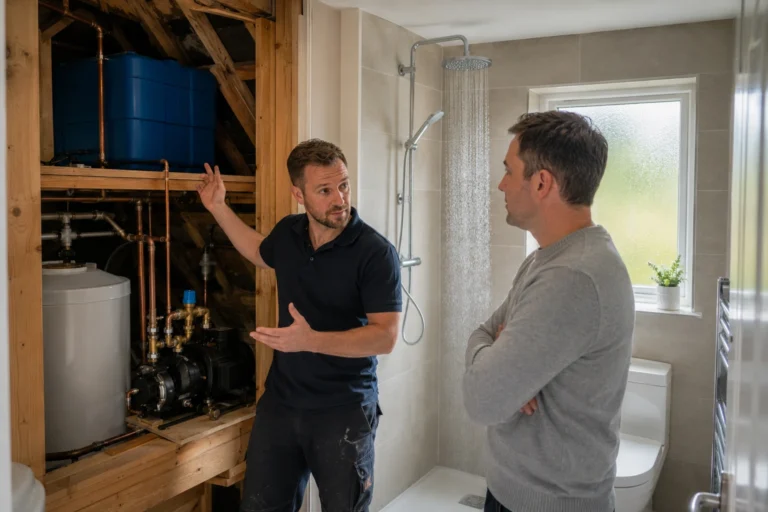
Many older homes across North Dublin still use gravity-fed plumbing systems. These systems rely on a cold water storage tank located in the attic to supply water to bathrooms and other parts of the house.
Because gravity creates the pressure, upstairs bathrooms are often the first place where problems become noticeable. If the water tank is not operating correctly or if there are restrictions within the pipework, the flow to showers and taps can become weak.
Newer homes may use different systems, but many properties built several decades ago still depend on attic tanks and traditional plumbing layouts.
1. Problems With the Attic Water Tank
The attic water tank plays a major role in supplying water throughout many North Dublin homes. If the tank is not filling properly, the available pressure can drop significantly.
Common issues include:
- Faulty ball valves
- Debris inside the tank
- Restricted water supply to the tank
- Incorrect water levels
- Ageing tank components
We often find that homeowners are unaware of problems in the attic until they start experiencing pressure issues elsewhere in the property.
2. Ageing Pipework Restricting Water Flow
Older pipework can gradually reduce water flow over time. Internal build-up, corrosion and previous plumbing repairs can all affect the amount of water reaching upstairs bathrooms.
Signs of pipework-related pressure problems may include:
- Weak flow from several taps
- Reduced shower performance
- Pressure that has gradually worsened over the years
- Different pressure levels throughout the house
Older homes in areas such as Finglas, Glasnevin and Ballymun can sometimes experience these issues due to ageing plumbing systems.
3. Problems With an Existing Shower Pump
Many North Dublin homes use shower pumps to improve water pressure. While these pumps can provide excellent performance when working correctly, faults can develop over time.
Common shower pump issues include:
- Pump not activating properly
- Worn internal components
- Airlocks within the system
- Incorrect pump selection
- Electrical faults
If your shower pressure suddenly drops but other taps appear normal, the shower pump may be the first thing that needs to be checked.
4. Blocked Shower Heads and Tap Aerators
Sometimes the solution is surprisingly simple.
Limescale, debris and sediment can build up inside shower heads and tap aerators, restricting water flow. This is particularly common in bathrooms that have not been serviced for several years.
Symptoms include:
- Uneven spray patterns
- Reduced water flow
- Water spraying in different directions
- Pressure issues affecting a single outlet only
Cleaning or replacing the affected fitting can often improve performance immediately.
5. Hidden Leaks Within the Plumbing System
Water leaks do not always leave obvious signs.
Small leaks beneath floors, inside walls or within concealed pipework can reduce pressure throughout the property. Over time, even a relatively minor leak can affect the overall performance of the plumbing system.
Possible warning signs include:
- Unexplained drops in pressure
- Damp patches
- Mould growth
- Increased water usage
- Sounds of running water when no taps are in use
A professional inspection can help identify whether a hidden leak is contributing to the problem.
6. Multiple Appliances Running at the Same Time
In some homes, pressure problems only become noticeable when several fixtures are being used together.
For example:
- A shower running upstairs
- A washing machine operating downstairs
- A dishwasher filling with water
When several appliances demand water simultaneously, older plumbing systems can struggle to maintain consistent pressure.
This is particularly common in larger family homes where water usage is higher throughout the day.
Signs the Problem Is Getting Worse
Low water pressure rarely improves on its own.
You may notice:
- Showers becoming weaker
- Longer bath filling times
- Slow-filling toilet cisterns
- Reduced hot water flow
- Greater differences between upstairs and downstairs pressure
Addressing the issue early can often prevent more expensive repairs later.
When a Shower Pump May Help
In some properties, a shower pump can provide a significant improvement in water pressure.
However, a pump is not always the correct solution.
Before installing a shower pump, it is important to identify the underlying cause of the problem. If the issue is caused by a faulty attic tank, damaged pipework or a plumbing fault, simply fitting a new pump may not solve the problem.
A proper assessment helps ensure the right solution is chosen.
Areas Where We Commonly See Water Pressure Problems
We regularly investigate low water pressure issues across:
- Swords
- Malahide
- Finglas
- Ballymun
- Glasnevin
- Santry
- Donabate
- Portmarnock
- Raheny
- Clontarf
Many of these areas contain older housing stock where plumbing systems have evolved over several decades and may require upgrades or repairs.
When Should You Call a Plumber?
If low water pressure is affecting your daily routine, it is worth having the system checked.
Professional assistance is recommended if:
- Pressure has suddenly dropped
- Multiple outlets are affected
- You suspect a leak
- Your shower pump is not working correctly
- The attic tank appears to have a problem
- Pressure continues to worsen
A professional inspection can identify the cause and recommend the most effective solution.
Final Thoughts
Low water pressure upstairs can be caused by several different issues, from attic water tank faults and ageing pipework to shower pump problems and hidden leaks.
Because many North Dublin homes use older plumbing systems, pressure issues are often linked to components that have gradually deteriorated over time.
If you are experiencing poor water pressure upstairs, identifying the cause early can help prevent further problems and restore reliable water flow throughout your home.
FAQ Section
Why is my water pressure low upstairs but fine downstairs?
This is often caused by issues with an attic water tank, ageing pipework, a faulty shower pump, or restrictions affecting the upstairs plumbing system. Gravity-fed systems commonly experience pressure problems in upper-floor bathrooms first.
Can an attic water tank cause low water pressure?
Yes. If the tank is not filling correctly or there is a fault with the ball valve, the available water supply can be reduced, resulting in poor pressure at showers and taps.
Will a shower pump fix low water pressure upstairs?
A shower pump can improve pressure in suitable systems, but it is important to identify the cause of the problem first. Installing a pump will not solve issues caused by leaks, blocked pipes, or tank faults.
Why has my water pressure suddenly dropped?
A sudden drop in pressure may indicate a plumbing fault such as a leak, a failed pump, a blockage, or a problem with the incoming water supply. A professional inspection can help identify the cause.
Can old pipes reduce water pressure?
Yes. Older pipework can develop internal build-up or corrosion that restricts water flow. This is more common in older homes where plumbing systems have not been upgraded for many years.
When should I call a plumber for low water pressure?
You should contact a plumber if the pressure continues to worsen, affects multiple fixtures, or if you suspect a problem with your water tank, shower pump, or pipework.