

Older North Dublin homes commonly experience attic water tank problems due to aging gravity-fed plumbing systems, worn ball valves, sediment buildup, poor insulation, and old copper pipework. These issues can lead to weak upstairs water pressure, overflow pipes dripping outside, noisy plumbing, frozen attic pipes, and inconsistent hot water flow.
Gravity-fed plumbing systems are still common in many older properties across Finglas, Ballymun, Glasnevin, Santry, and nearby North Dublin areas.
Common signs of attic water tank problems:
- Low water pressure upstairs
- Weak shower pressure
- Overflow pipe constantly dripping
- Noisy pipes in the attic
- Slow hot water flow
- Airlocks in plumbing systems
- Frozen attic pipes during winter
- Damp patches near ceilings
Quick Answer:
Attic water tank problems are often caused by:
- Faulty ball valves
- Old copper pipes
- Sediment buildup
- Poor attic insulation
- Aging gravity-fed plumbing systems
In many older North Dublin homes, these issues develop slowly over time and may first appear as weak upstairs water pressure or strange plumbing noises.
What Does an Attic Water Tank Do?
An attic water tank, also called a cold water storage tank, stores water for parts of the plumbing system inside the house.
In many older North Dublin homes, the attic tank supplies:
- Hot water cylinders
- Upstairs bathroom taps
- Toilets
- Gravity-fed showers
- Some kitchen or utility connections
Older Irish homes commonly use gravity-fed plumbing systems instead of modern mains pressure systems.
This means the water pressure depends on:
- The height of the attic tank
- Pipe size
- Plumbing layout
- Condition of the pipework
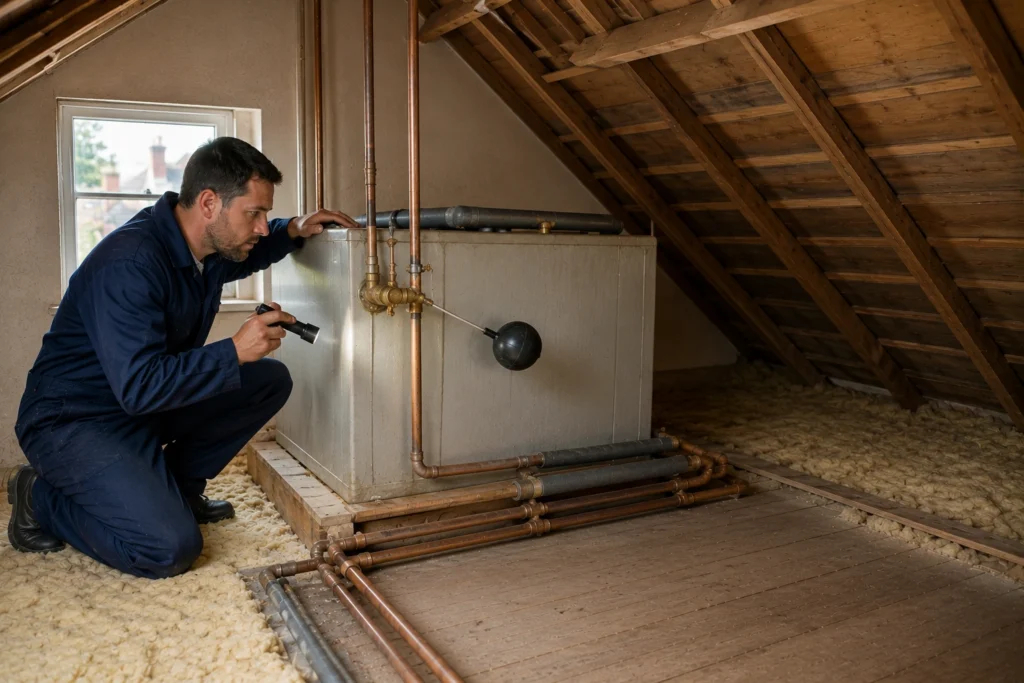
Why older systems often develop problems:
- Old attic water tanks wear over time
- Ball valve problems can cause overflow
- Sediment can build up inside the tank
- Old copper pipes may become restricted
- Poor insulation can lead to frozen pipes
Many homeowners only notice the issue when:
- Shower pressure becomes weak upstairs
- Hot water flow slows down
- Overflow pipes start dripping outside
- Pipes begin making banging or gurgling noises
Common Attic Water Tank Problems in Older Homes
Older attic water tanks can develop several plumbing problems over time, especially in homes with aging gravity-fed plumbing systems.
Below are some of the most common attic water tank problems we regularly see in North Dublin homes.
Low Water Pressure Upstairs
One of the biggest complaints in older homes is weak upstairs water pressure.
This often affects:
- Upstairs showers
- Bathroom taps
- Hot water flow
- Toilet refill speed
Common causes include:
- Low attic tank height
- Restricted old copper pipes
- Sediment buildup
- Undersized pipework
- Aging gravity-fed plumbing systems
Homes with attic conversions can sometimes experience even weaker pressure upstairs.
Attic Water Tank Overflow Problems
A constantly dripping overflow pipe is usually a sign something is wrong inside the attic tank.
In many cases, the issue is caused by:
- Faulty ball valve problems
- Sticking float valves
- Debris inside the tank
- Worn internal components
Signs of attic water tank overflow:
- Water dripping outside continuously
- Overflow pipe running after toilets refill
- Increased water bills
- Damp areas near the overflow outlet
Leaving overflow problems untreated can waste a large amount of water over time.
Airlocks in Plumbing Systems
Airlocks are very common in older gravity-fed plumbing systems.
An airlock happens when trapped air blocks normal water flow inside the pipework.
Common symptoms include:
- Taps spluttering
- Weak water flow
- No water from upstairs taps
- Gurgling pipe noises
- Inconsistent shower pressure
Airlocks are often triggered by:
- Plumbing repairs
- Drained systems
- Low water levels in the attic tank
- Old pipe layouts
Leaking or Cracked Water Tanks
Older attic water tanks can weaken with age and eventually begin leaking.
This is more common in:
- Older plastic tanks
- Galvanised metal tanks
- Poorly supported attic tanks
Warning signs include:
- Damp ceilings
- Water stains upstairs
- Musty smells in the attic
- Visible cracks or corrosion
- Dripping around tank connections
Small leaks can quickly become expensive if water damage spreads into ceilings or insulation.
Why Older North Dublin Homes Are More Affected
Many older North Dublin homes still use plumbing systems installed decades ago.
Areas like Finglas, Ballymun, Glasnevin, Coolock, and older parts of Santry often contain:
- Gravity-fed plumbing systems
- Older attic water tanks
- Old copper pipes
- Narrow pipework
- Aging hot water cylinders
These older systems are usually reliable, but they naturally become more vulnerable over time.
Common reasons older homes experience more problems:
- Pipework may have corrosion buildup internally
- Older attic tanks may lack proper insulation
- Ball valves wear out with age
- Plumbing layouts were designed for lower water demand
- Older homes may have outdated shower or heating setups
In many properties, attic conversions or bathroom upgrades were added years later without fully upgrading the original plumbing system.
This can lead to:
- Weak upstairs shower pressure
- Water flow restrictions
- Airlocks in plumbing systems
- Inconsistent hot water supply
Older North Dublin homes also tend to experience more winter plumbing issues due to colder attic spaces and poorly insulated pipework.
Signs Your Attic Water Tank May Need Attention
Many attic water tank problems start with small warning signs that are easy to overlook.
Catching problems early can help avoid leaks, water damage, and major plumbing repairs later.
Common warning signs include:
- Weak upstairs shower pressure
- Slow hot water flow
- Overflow pipe dripping outside
- Noisy pipes in the attic
- Gurgling sounds after using taps
- Dirty or discoloured water
- Damp patches near ceilings
- Water hammer or banging noises
Some homeowners also notice:
- Toilets taking longer to refill
- Reduced water flow during busy periods
- Inconsistent water temperature
- Airlocks in plumbing systems
If several of these signs appear together, the attic water tank or gravity-fed plumbing system may need inspection.
Can an Old Attic Water Tank Affect Shower Pressure?
Yes — older attic water tanks are one of the most common causes of weak upstairs shower pressure in older North Dublin homes.
Gravity-fed systems rely on water height and pipe layout to create pressure. As systems age, the flow can become weaker.
Common causes of low shower pressure linked to attic tanks:
- Low water tank position
- Restricted old copper pipes
- Sediment buildup inside the tank
- Partially blocked pipework
- Small gravity-fed pipe sizes
- Airlocks in plumbing systems
Homes with attic conversions often experience more pressure problems because the shower may sit closer to the attic tank height.
Signs the attic tank may be affecting shower performance:
- Weak pressure upstairs only
- Slow hot water flow
- Shower pressure dropping when taps are used
- Pulsing or inconsistent shower flow
- Noisy pipework during shower use
In some homes, a shower pump may help improve pressure. However, older plumbing systems sometimes require pipework upgrades or attic tank repairs first.
Should You Repair or Replace an Old Attic Water Tank?
Not every attic water tank needs full replacement. In some cases, small repairs can solve the problem.
Repairs may be enough for:
- Faulty ball valve problems
- Minor overflow issues
- Small pipe leaks
- Loose fittings
- Basic insulation upgrades
However, older attic water tanks may eventually become unreliable due to age and wear.
Replacement may be recommended if:
- The tank is cracked or leaking
- Corrosion is visible
- Water quality problems develop
- The system suffers repeated airlocks
- The tank lacks proper insulation
- Pipe connections are heavily worn
Modern attic water tanks are usually:
- Better insulated
- More hygienic
- More energy efficient
- Less prone to freezing during winter
In some older North Dublin homes, upgrading parts of the gravity-fed plumbing system can also improve water pressure and overall plumbing reliability.
How We Help Homeowners Across North Dublin
We regularly work on attic water tank problems in older North Dublin homes, especially in areas with aging gravity-fed plumbing systems.
Many of the homes we visit in Finglas, Ballymun, Glasnevin, Santry, Coolock, and nearby areas still use older attic tank setups installed decades ago.
Common issues we frequently see:
- Attic water tank overflow problems
- Weak upstairs water pressure
- Frozen attic pipes during winter
- Faulty ball valve problems
- Airlocks in plumbing systems
- Old copper pipe restrictions
- Noisy attic pipework
- Leaking cold water storage tanks
In many cases, the plumbing system itself is still functional but needs repairs, upgrades, or better insulation to improve reliability.
Older attic spaces can also create problems due to:
- Poor ventilation
- Limited insulation
- Aging pipe supports
- Restricted access around the tank
We often find that small issues left untreated for too long eventually lead to larger plumbing problems or water damage inside the home.
Frequently Asked Questions
What causes attic water tank overflow?
Attic water tank overflow is usually caused by faulty ball valve problems, debris inside the valve, or worn internal components that stop the water shutting off properly.
Can attic water tanks reduce water pressure?
Yes. Older attic water tanks and gravity-fed plumbing systems can sometimes cause weak upstairs water pressure, especially if the pipework is restricted or the tank sits too low.
Are attic water tanks still used in Ireland?
Yes. Many older North Dublin homes still use attic water tanks and gravity-fed plumbing systems, particularly in houses built before modern mains pressure systems became common.
How long do attic water tanks last?
Most attic water tanks can last many years, but older tanks may eventually develop leaks, corrosion, overflow issues, or insulation problems as the system ages.
Can frozen attic pipes stop water flow upstairs?
Yes. Frozen attic pipes are a common winter problem in poorly insulated attic spaces and can reduce or completely stop water flow to upstairs bathrooms.
Should old attic water tanks be replaced?
Older attic water tanks may need replacement if they are leaking, cracked, heavily corroded, poorly insulated, or causing repeated plumbing problems throughout the home.
Conclusion
Attic water tank problems are still very common in older North Dublin homes, especially in properties using older gravity-fed plumbing systems.
Issues such as:
- Weak upstairs shower pressure
- Overflow pipes dripping
- Airlocks in plumbing systems
- Frozen attic pipes
- Old copper pipe restrictions
can all affect the performance of the plumbing system over time.
Many of these problems begin gradually and become more noticeable as the plumbing system ages.
Regular inspections and early repairs can help prevent larger plumbing issues, water damage, and ongoing water pressure problems in older homes.