

A toilet making noise after flushing can be annoying, especially when the sound carries on long after you expect the cistern to have finished filling. You might hear hissing, whistling, humming, gurgling or even a sudden banging sound from the toilet or nearby pipes.
In many cases, the noise starts while the cistern is refilling. A worn fill valve, a problem with the float, water continuing to run into the bowl or vibration in the pipework can all cause unusual sounds. Gurgling can point to a different type of problem involving the drainage system.
We come across toilet and cistern problems in homes around North Dublin, and the sound itself often gives us the first clue about where to look. The important thing is to notice what the noise sounds like, when it starts and how long it continues after flushing.
Below, we explain the common noises, what they may mean and a few simple checks you can make before deciding whether you need a plumber.
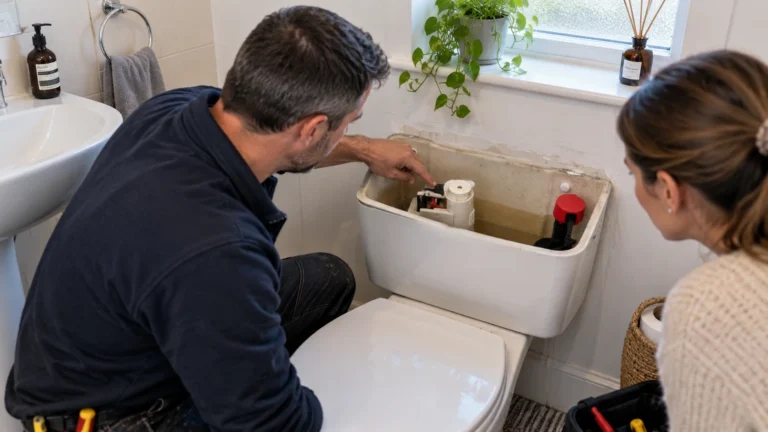
What Does the Noise From Your Toilet Sound Like?
Not every noisy toilet has the same problem. Before replacing anything, it helps to identify the type of sound you’re hearing.
Flush the toilet once and listen carefully. Does the noise happen immediately? Does it continue while the cistern fills? Or does it start after the toilet has finished refilling?
Those small details can help narrow down the cause.
Hissing Noise After Flushing
A hissing sound is one of the more common noises you may hear after flushing a toilet.
After you flush, the cistern needs to refill with water. The fill valve opens to let water in and should close once the correct water level has been reached.
If the hissing continues for longer than normal, the fill valve may not be shutting properly, the float may not be working correctly, or water may still be escaping from the cistern into the toilet bowl.
A simple check is to wait until the cistern appears to be full and listen again. If you can still hear water running, look inside the bowl for a small but continuous stream of water.
Uisce Éireann recommends this as one of the simple ways to check for an internal plumbing leak. They suggest listening for constant running from the cistern and checking the toilet bowl for a stream of water.
Uisce Éireann – checking for leaks at home
If your toilet continues running rather than simply making a short refill noise, our guide to why a toilet keeps running explains the problem in more detail.
Whistling or Squealing Noise When the Toilet Refills
A toilet that whistles or squeals after flushing often makes the noise while water is entering the cistern.
This can happen when water is being forced through a worn or restricted part of the inlet or fill valve. The toilet may still flush and refill, so it’s easy to ignore at first.
Pay attention to whether the whistle:
- starts as soon as the cistern begins filling;
- changes pitch as the water level rises; or
- disappears as soon as the cistern becomes full.
If it consistently follows that pattern, the fill mechanism is one of the first places we would investigate.
A noisy valve doesn’t automatically mean the whole toilet needs replacing. Depending on its condition and the type of cistern, the problem may be isolated to one component.
Humming or Vibrating Noise After Flushing
A humming or vibrating sound can feel more worrying because you may hear it through the wall or floor as well as at the toilet.
The source isn’t always the toilet itself.
The refill valve can sometimes vibrate as water passes through it. Nearby pipework can also transmit that vibration, making a relatively small problem sound much louder elsewhere in the house.
Water pressure and loose pipe supports can also contribute to vibration, so we wouldn’t diagnose the problem from the sound alone.
Try placing your hand gently on the outside of the cistern while it refills. If you can feel the vibration at the same time as you hear the humming, make a note of it. Also check whether the same noise occurs when you use a nearby tap.
Those observations can make the fault much easier to trace.
Gurgling Noise After Flushing
Gurgling is different from the normal sound of a cistern filling.
If the toilet gurgles after flushing — particularly if you also notice gurgling from a sink, shower or another toilet — the problem may involve the drainage system rather than the cistern’s refill mechanism.
Watch for other symptoms such as:
- water draining more slowly than usual;
- the water level in the toilet bowl changing unexpectedly;
- bubbles appearing in the bowl;
- another fixture gurgling when the toilet is flushed.
This is one reason we don’t recommend assuming every toilet making noise after flushing simply needs a new fill valve. A hissing cistern and a gurgling drain can sound like similar complaints to a homeowner but point us towards very different areas of the plumbing system.
Banging or Knocking After the Toilet Is Flushed
A sharp bang or knock can happen when the flow of water changes quickly or when pipework moves as the toilet fills and shuts off.
If the sound is coming from the pipes rather than directly from the cistern, it may be related to water hammer, pressure changes or pipework that isn’t adequately supported.
We’ve covered this separately because banging pipes can occur when using taps, washing machines and other fixtures as well as toilets.
Our noisy pipes and water hammer guide explains the different pipe noises and common causes in more detail.
Why Does My Toilet Make Noise After Flushing?
Once you’ve identified the type of sound, the next step is understanding what is happening inside the toilet.
A modern toilet may look simple from the outside, but several components inside the cistern work together every time you flush. The flush releases water into the bowl, the cistern begins refilling, and the inlet valve should shut once the correct water level has been reached.
If one part isn’t operating correctly, the toilet may continue hissing, whistling, vibrating or running.
1. Worn or Faulty Fill Valve
The fill valve controls the water entering the cistern after you flush.
When the toilet is working normally, the valve opens, allows the cistern to refill and then closes once the required water level is reached.
As the valve or its internal components wear, it may become noisy or fail to shut cleanly. You might notice that the toilet:
- takes longer than usual to refill;
- hisses or whistles while filling;
- continues making noise after the cistern looks full; or
- starts becoming noisier over time.
We don’t automatically replace a valve just because a toilet makes a sound. We first look at when the noise occurs, whether the cistern reaches the correct level and whether water continues escaping into the bowl. That helps distinguish a worn valve from another cistern or water-supply problem.
2. Float or Water-Level Problem
The float helps control when the water entering the cistern should stop.
If the float is sticking, incorrectly positioned or no longer operating properly, the cistern may continue trying to fill after it has already reached its normal level.
That can produce persistent running or hissing.
One useful check is simply to remove the cistern lid if it can be lifted safely and easily without forcing any fittings, flush the toilet and watch what happens as it refills. Don’t dismantle the mechanism.
The water should rise and eventually stop. If it keeps entering the cistern, reaches the overflow, or repeatedly starts and stops, there’s likely something that needs attention.
3. Water Continuing to Run Into the Toilet Bowl
Sometimes the noise isn’t really the main problem — it’s the clue that reveals a small continuous leak.
After the toilet has finished flushing and refilling, look carefully at the back of the toilet bowl. If you can see water continuing to trickle down the surface, water may be escaping from the cistern.
Uisce Éireann specifically recommends checking toilets for a constant sound of running water and looking for a stream inside the bowl. It notes that repairing household leaks can significantly reduce unnecessary water loss.
This is worth investigating even if the toilet still appears to work normally. A toilet that continuously loses water has to keep replacing that water, which can explain why the cistern seems to come back to life and make noise when nobody has flushed it.
For homeowners looking for a plumber in Dublin, Dublin Plumber 24 Hrs covers toilet repairs, leaks and general plumbing problems across our service area.
4. High Water Pressure or Vibration
Sometimes a toilet making noise after flushing is reacting to the way water enters the cistern rather than a fault with the flush itself.
As the cistern refills, water passes through the inlet valve under pressure. If a valve is worn, partially restricted or beginning to vibrate, you may hear a humming, buzzing or rattling sound. That vibration can also travel through nearby pipework, making the noise seem as though it is coming from inside a wall or under the floor.
A useful clue is whether similar noises happen when you quickly turn off a tap or when another appliance stops taking water.
We wouldn’t assume high water pressure is the cause based on noise alone. The valve, pipework and water supply all need to be considered before deciding what needs repairing.
If you are also experiencing weak or inconsistent pressure elsewhere in the house, our guide to low water pressure in Dublin covers some of the other causes worth checking.
5. Loose Pipework or Fittings
The toilet itself isn’t always responsible for the noise.
When the cistern begins or finishes filling, nearby pipes can move slightly. If pipework isn’t properly supported, that movement can create knocking, tapping or vibrating sounds.
This can be particularly confusing because the sound may travel. You flush the upstairs toilet, for example, but hear the knock from a wall or ceiling somewhere else.
Try to notice whether the sound happens when filling begins, while water is flowing, or exactly when the water stops. That information can be very useful when the problem is inspected.
6. A Drainage or Venting Problem
If the sound is more of a gurgle or bubbling noise, we start looking beyond the cistern.
Gurgling can sometimes indicate that water or air isn’t moving normally through the drainage system. You might also notice a sink or shower draining slowly, bubbles appearing in the toilet bowl, or another fixture making a noise when the toilet is flushed.
Uisce Éireann lists gurgling sounds when water drains, slow-emptying sinks or baths, and toilets that are difficult to flush among the signs that can be associated with a blocked drain.
Uisce Éireann guidance on blocked drains
This distinction matters. Replacing a toilet fill valve won’t solve a drainage problem, which is why identifying where and when the noise occurs is more useful than guessing from the sound alone.
Is a Noisy Toilet Something to Worry About?
Not every noise means there’s a serious plumbing problem.
A normal toilet will make some sound while the cistern refills. If the noise lasts only for the normal refill period and then completely stops, there may be nothing wrong.
We would pay more attention if:
- the noise has suddenly become louder or lasts much longer than before;
- the toilet continues hissing after the cistern is full;
- water constantly trickles into the bowl;
- the cistern takes unusually long to refill;
- you hear strong vibration or banging in the pipework;
- the toilet gurgles and other drains are slow;
- water appears around the toilet or cistern; or
- the toilet starts making noises even when nobody has used it.
A toilet that starts refilling by itself can be particularly useful evidence. It can mean water is slowly escaping from the cistern, causing the valve to reopen and replace the lost water.
Simple Checks You Can Make Yourself
Before arranging a repair, there are a few safe checks that can tell you more about the problem.
1. Flush and listen carefully.
Notice exactly when the sound begins. Is it during the flush, while the cistern is filling or after everything should have stopped?
2. Time roughly how long the noise lasts.
A brief refill sound is very different from hissing that continues for several minutes.
3. Look inside the toilet bowl.
Once the toilet has finished filling, check whether water is still trickling down the back of the bowl.
4. Listen near the cistern.
Try to work out whether the sound comes from inside the cistern or from nearby pipework.
5. Check other fixtures.
Run a nearby tap or flush another toilet. If the same vibration, knocking or gurgling occurs elsewhere, the issue may not be limited to one toilet.
6. Look for visible water.
Check around the toilet, cistern and accessible connections for signs of dripping or moisture.
If your cistern lid lifts off easily, you can also observe the refill process without touching or dismantling the mechanism. If you’re unsure about the fittings, leave them alone. A simple observation is often enough to give a plumber useful information.
Can a Noisy Toilet Waste Water?
It can — particularly when the noise is caused by a cistern that doesn’t shut off properly or water continuously escaping into the bowl.
The toilet may still appear to flush normally, which is why these problems can go unnoticed. If water is slowly escaping, the cistern may repeatedly refill to maintain its normal level.
Uisce Éireann advises households to check for and repair dripping taps, cisterns and pipes as part of reducing unnecessary water use. Its First Fix guidance also distinguishes internal plumbing leaks, which are the homeowner’s responsibility to arrange repairs for, from qualifying leaks on external supply pipes.
So if you can hear water running long after you’ve flushed, it’s worth finding the cause rather than simply getting used to the noise.
Does the Toilet Need a New Fill Valve?
Not necessarily.
The fill valve is a common place to investigate when a toilet hisses, whistles or becomes noisy while refilling, but we don’t recommend replacing parts based on the noise alone.
When we inspect a noisy toilet, we look at things such as:
- whether the cistern fills to the correct level;
- how quickly the water shuts off;
- whether water continues entering the bowl;
- the condition and operation of the fill valve and float;
- whether vibration is coming from the valve or pipework; and
- whether the symptoms suggest a drainage issue instead.
Sometimes the fault can be isolated to one worn component. In other situations, replacing an ageing valve may be more practical than repeatedly adjusting it.
The important point is that a noisy toilet doesn’t automatically mean you need a new toilet.
Noisy Toilets in North Dublin Homes
When we’re called to investigate toilet and cistern problems, we don’t assume every property will have the same setup.
Different homes can have different cistern designs, valves, water supplies and pipework arrangements. Two homeowners can describe exactly the same hissing or humming noise and still have different underlying problems.
That’s why we normally start with a few simple questions: What does the noise sound like? When does it start? How long does it last? Is water still running? Are any other fixtures affected?
Those details often point us in the right direction before we start replacing anything.
When Should You Call a Plumber?
If the toilet makes a short, normal filling sound and then becomes completely quiet, you may not need to do anything.
It’s worth having the toilet checked when the noise is persistent, getting worse or accompanied by another problem. This is particularly true if water keeps running into the bowl, the cistern won’t fill correctly, there’s a leak, the pipework bangs heavily, or several drains begin gurgling or draining slowly.
If there’s water actively leaking onto the floor, deal with it promptly rather than waiting to see whether it stops.
For a toilet making noise after flushing, telling us whether it’s hissing, whistling, humming, banging or gurgling can also help us understand what needs to be checked.
Frequently Asked Questions
Why is my toilet making noise after flushing?
A toilet making noise after flushing is often related to the cistern refilling. The fill valve, float, water flow or nearby pipework may be responsible. If the sound is gurgling rather than hissing or whistling, a drainage problem may also need to be considered.
Why does my toilet hiss after I flush?
Hissing commonly happens while water is entering the cistern. If it stops once the cistern is full, it may simply be part of the refill process. Persistent hissing can indicate that the fill valve isn’t shutting correctly or that water is continuing to escape from the cistern.
Why does my toilet whistle when the cistern is filling?
A whistling or squealing sound can occur as water passes through the inlet or fill valve. If the noise has recently appeared or is becoming louder, the valve may need to be inspected.
Why does my toilet keep making noise after it has filled?
If the toilet should be full but you can still hear running or hissing, check whether water is trickling into the bowl. A cistern that is losing water may keep refilling even when nobody has flushed the toilet.
Why does my toilet gurgle after flushing?
Gurgling can indicate a drainage issue rather than a problem with the cistern. If sinks, showers or other toilets are also draining slowly or gurgling, a blockage or drainage problem may need investigation. Uisce Éireann also identifies gurgling and slow drainage among signs of a possible blockage.
Can a faulty toilet waste water?
Yes. If water continually escapes from the cistern into the bowl or a valve fails to shut properly, fresh water may continue entering the cistern unnecessarily. Uisce Éireann recommends repairing dripping cisterns and other household leaks to reduce water waste.
Need Help With a Noisy Toilet?
If your toilet has started hissing, whistling, humming, banging or gurgling after flushing, you don’t necessarily need to replace the whole toilet. The first step is finding out where the noise is coming from and why it’s happening.
We can inspect toilet and cistern faults, explain what we’ve found and advise on the appropriate repair. Whether it’s a worn valve, continuously running cistern, pipework vibration or another plumbing problem, the aim is to fix the cause rather than simply silence the symptom.
For plumbing repairs and advice across our service area, visit Dublin Plumber 24 Hrs or contact us to arrange a visit.