

A cold water tank overflowing is usually caused by a faulty ball valve, a worn float valve, or debris stopping the valve from closing properly. In many older North Dublin homes, attic water tank problems are common because the plumbing system may be decades old. If left alone, an overflowing tank can waste water, increase bills, and cause damage to ceilings, insulation, and timber in the attic.
The good news is that many cold water tank repair jobs can be completed quickly once the cause is found. In some cases, a cold water tank replacement may be the better option, especially if the tank is old or damaged.
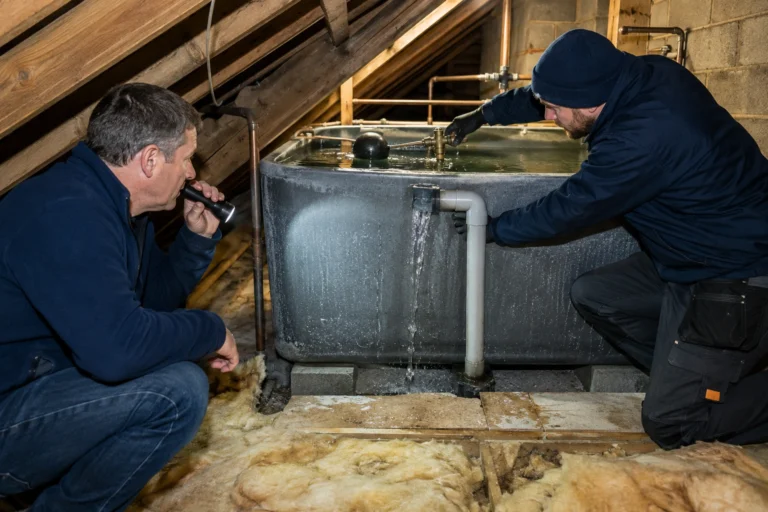
Why Is My Cold Water Tank Overflowing?
If you have noticed water dripping from an overflow pipe outside your home, there is a good chance that your cold water tank is overflowing.
Many homeowners first spot the problem when they see water running from a pipe near the roof or hear water constantly flowing in the attic.
A cold water tank should fill to a set level and then stop. When water continues entering the tank after it reaches that level, it has nowhere to go except through the overflow pipe.
This is a common problem in older North Dublin homes, especially in areas such as Finglas, Ballygall, Glasnevin, Ballymun, Whitehall, and Santry where many properties still use traditional attic water tanks.
What Does a Cold Water Tank Do?
A cold water tank stores water for different parts of your home’s plumbing system.
Depending on the property, it may supply:
- Bathroom taps
- Toilets
- Showers
- Hot water cylinders
Many older homes across North Dublin still rely on gravity-fed plumbing systems. These systems use a cold water storage tank in the attic to provide water throughout the house.
When everything is working correctly, the tank fills automatically and maintains a safe water level.
What Causes a Cold Water Tank to Overflow?
There are several reasons why a cold water tank overflowing problem can occur.
The most common causes include:
- Faulty ball valve
- Worn float valve
- Debris inside the tank
- Incorrect water level
- Corroded fittings
- Age-related wear and tear
Let’s look at these in more detail.
Faulty Ball Valve: The Most Common Cause
The ball valve is usually the first thing we check.
Inside the tank is a floating ball connected to a valve. As the water rises, the float rises with it. Once the water reaches the correct level, the valve shuts off the incoming water supply.
When the ball valve fails, the water continues flowing into the tank.
As a result:
- The tank overfills.
- Water escapes through the overflow pipe.
- Water bills increase.
- The problem continues day and night.
A faulty ball valve is one of the most common cold water tank repair jobs we carry out in older homes.
Debris Inside the Tank
Over time, dirt, sediment, and small particles can build up inside a tank.
This debris can stop the valve from sealing properly.
Even a small obstruction may prevent the valve from shutting off fully.
The result is often a slow but constant overflow that continues for weeks or even months before being noticed.
Worn Float Valve Components
Many tanks installed years ago still have original components.
Like any mechanical part, float valves wear out over time.
Common signs include:
- Sticking floats
- Corroded parts
- Slow shut-off
- Water level fluctuations
When these parts become unreliable, replacing them is often the simplest solution.
Problems We Commonly See in Older North Dublin Homes
Older properties across North Dublin often have plumbing systems that were installed decades ago.
Many of these homes still use:
- Traditional attic tanks
- Older copper pipework
- Original valves and fittings
- Gravity-fed water systems
Because of their age, these systems can develop issues that are rarely seen in newer homes.
We regularly find:
- Seized ball valves
- Corroded fittings
- Damaged overflow pipes
- Cracked tank lids
- Excess sediment inside tanks
These problems are particularly common in homes that have had little plumbing maintenance over the years.
Can an Overflowing Water Tank Cause Damage?
Many homeowners think a small drip from an overflow pipe is nothing to worry about. Unfortunately, that is not always the case.
An overflowing cold water tank can cause several problems if it is left for too long.
These include:
- Higher water bills
- Damp attic insulation
- Ceiling stains
- Mould growth
- Rotting timber
- Damage to nearby electrical equipment
Even if the overflow appears minor, water can be escaping all day and all night. Over weeks and months, this can waste a surprising amount of water.
If you notice water running from an overflow pipe, it is worth getting it checked before a small issue becomes a larger repair.
How to Check If Your Cold Water Tank Is Overflowing
There are a few simple signs that can help you identify the problem.
Check the Overflow Pipe
The easiest sign is water dripping or running from an overflow pipe outside your property.
Many homeowners first spot the issue when they see water flowing from a pipe near the roofline.
Listen for Running Water
If you hear water constantly entering the tank, even when nobody is using water in the house, the valve may not be shutting off properly.
Check the Water Level
If it is safe to access the attic, take a look at the tank.
The water level should sit below the overflow outlet. If the water level is too high, there is likely a problem with the valve mechanism.
Look for Damp Areas
Check around the tank for signs of moisture, damp insulation, or water marks.
These may indicate that the tank has been overflowing for some time.
Should You Repair or Replace the Tank?
The answer depends on the age and condition of the system.
When a Repair Is Usually Enough
A repair is often the best option when:
- The ball valve has failed.
- The float arm needs adjusting.
- A fitting has become loose.
- The overflow pipe requires attention.
- The tank itself is in good condition.
In many cases, replacing a faulty valve quickly solves the problem.
When Replacement May Be Better
Sometimes a cold water tank replacement makes more sense.
This may be recommended when:
- The tank is cracked.
- The tank has become brittle with age.
- Multiple parts have failed.
- The system has a history of recurring problems.
- The tank is heavily contaminated.
While a repair may cost less initially, replacing an ageing tank can prevent further issues and improve reliability.
How We Fix Overflowing Cold Water Tanks in North Dublin
Every property is different, so we start by identifying the exact cause of the overflow.
Our process normally includes:
- Inspecting the cold water tank.
- Checking the ball valve operation.
- Examining the float arm and fittings.
- Checking the water level.
- Inspecting the overflow pipe.
- Looking for signs of damage or wear.
Once the problem has been identified, we can recommend the most suitable repair.
Common repairs include:
- Ball valve replacement
- Float valve replacement
- Water level adjustment
- Overflow pipe repairs
- Cold water tank replacement
For older North Dublin homes, replacing worn components early can help avoid future leaks and water damage.
Preventing Future Water Tank Problems
While some parts naturally wear out with age, a little maintenance can help reduce the risk of problems.
Here are a few simple tips:
Inspect the Tank Periodically
A quick visual check every few months can help identify issues before they become serious.
Watch the Overflow Pipe
If you notice water dripping outside, do not ignore it.
Small leaks often become larger problems over time.
Keep the Tank Covered
A proper lid helps prevent dirt and debris entering the tank.
Replace Ageing Valves
Older valves eventually wear out. Replacing them before they fail can help prevent overflow issues.
Address Problems Early
If you hear unusual sounds or notice changes in water levels, it is best to investigate sooner rather than later.
Final Thoughts
A cold water tank overflowing is usually caused by a faulty ball valve, worn float valve, or another issue affecting the water level inside the tank.
While the problem may seem minor at first, it can lead to wasted water, higher bills, and damage inside your home if left untreated.
Many older North Dublin homes still rely on attic water tanks and gravity-fed plumbing systems, making this a fairly common issue.
The good news is that most cold water tank repair jobs are straightforward once the cause has been identified. For older systems, a cold water tank replacement may provide a longer-term solution.
If you have noticed water running from an overflow pipe or suspect a problem with your attic water tank, it is always better to deal with it early before further damage occurs.
FAQs
Why is my cold water tank overflowing?
The most common cause is a faulty ball valve that is no longer shutting off the incoming water supply when the tank reaches the correct level.
Can a faulty ball valve cause an overflowing tank?
Yes. A failed ball valve is one of the most common reasons a cold water tank starts overflowing.
Is an overflowing water tank dangerous?
It can cause water damage, dampness, mould growth, and higher water bills if left unresolved.
Should I turn off the water supply if the tank is overflowing?
If the overflow is severe, turning off the water supply may help reduce damage until the issue can be repaired.
How much does it cost to repair a cold water tank?
The cost depends on the fault, the condition of the tank, and whether replacement parts are required.
When should a cold water tank be replaced?
Replacement is usually recommended if the tank is cracked, heavily worn, or experiencing multiple recurring problems.
Can an overflowing tank increase my water bill?
Yes. Even a small overflow can waste a considerable amount of water over time.
Do older North Dublin homes still use attic water tanks?
Yes. Many older homes across North Dublin continue to use attic water tanks as part of their gravity-fed plumbing systems.